- Squiz Shortcuts
- Posts
- The Social Media Ban for U16s - Part 2: How will the ban work?
The Social Media Ban for U16s - Part 2: How will the ban work?
Part 2 - How will the ban work?
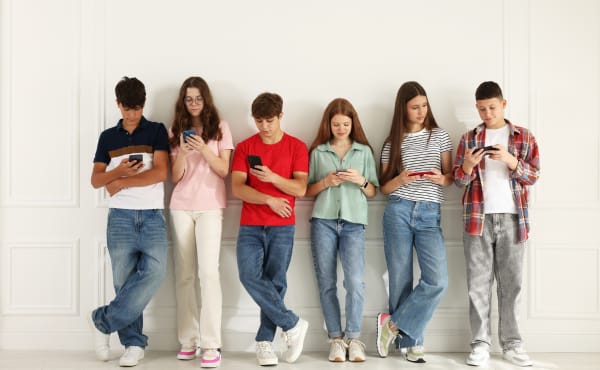
We’re just days away from 10 December, when all Aussie kids under the age of 16 will be legally banned from social media apps. In Part 2 of our series on Australia’s world-first legislation, we’re looking at the nuts and bolts of how the ban will work, including:
how the policy will be enforced
how the tech giants will go about identifying who is under age
and what the implications could be for kids looking for online alternatives…
Prefer to listen or watch?
Listen to Andrew Williams and Bryce Corbett cover this topic in this Squiz Shortcut podcast episode, or check it out on YouTube - and hit subscribe while you’re at it.
Listen time: 16 minutes
Squiz the Shortcut
So, the deadline’s approaching… How is it going to work?
It’s not entirely clear yet, but what is in place is the legal framework. As we mentioned in Part 1, platforms like Instagram, Snapchat and YouTube will have to pay fines of up to $49.5 million for each breach of the law. So, in theory, every time a kid under 16 is found on one of these platforms, the tech company cops a massive fine.
Who will police that?
The eSafety Commission has been given that role. Under the guidance of eSafety Commissioner Julie Inman Grant, it’ll decide which platforms are included or exempt. According to its website, it’ll also monitor compliance and enforce the law under the Online Safety Act.
Has the list of platforms been finalised?
The list has been evolving quite a bit - it feels like every other day there’s either a new addition, or a platform that’s in line to be ruled in or out. All the biggies were named in the initial list - Facebook, Instagram, TikTok, Snapchat, and X. Then YouTube, Kick and Reddit were added.
How popular is YouTube with kids?
It’s massive… Kids today don't watch free-to-air telly except for maybe the odd sporting event. Instead, they watch streaming platforms and YouTube, as many parents will attest. Booting them off YouTube is going to be seismic. Although, as many a kid will tell you, they don’t need an account to watch content on it - only to comment and chat.
What other platforms have been added to the list?
A popular gaming streaming platform called Twitch was added a fortnight ago, and the government has announced it's keeping an eye on Discord - which is a discussion/forum app that’s also big with gamers.
Which platforms are outside the ban?
There are plenty - YouTube Kids, Google Classroom and WhatsApp to name a few. And this gets to the heart of one of the main criticisms of the ban - that it's going to struggle to keep up with the evolving ways kids gather and communicate online. Critics have likened it to a whack-a-mole exercise, meaning that for every social media platform you ban, three others will pop up and kids will gather there.
Is that a problem?
Critics of the social media ban, and indeed some of the big tech platforms, say yes it is a problem because kids will be pushed into unregulated corners of the internet.
Just explain that a bit more…
For all of the problems posed by the TikToks and Snapchats of the world, at least their parent companies are somewhat accountable for what goes on there. Let’s be real; kids will still be online… it’s just a matter of where. It’s a bit like the plot of Footloose…
Like when the county tried to ban rock music?
Exactly… Those pesky kids are going to find somewhere to dance, and it might be some dingy old warehouse with lots of exposed bits of rusty metal and no occupational health and safety standards at all. It’s something that’s already happening - and Communications Minister Anika Wells saw it herself a couple of weeks ago…
Where did she see it?
Minister Wells went with Squiz Kids Director Bryce Corbett to see Newshounds in action at a school in her Brisbane electorate. Newshounds is our free media literacy program for primary school kids that teaches them to Stop, Think and Check before believing everything they see online.
Remind me how it works…
It's a 9-part, plug-and-play classroom resource that teaches kids to think critically about the flood of content they're served up online each day, helping them recognise mis and disinformation. More than 5,000 primary school teachers are involved around Oz, and Bryce was there to demonstrate to the Minister how it works.
And what happened…?
Minister Wells took a series of questions from the students, a room of around 50 Year 6 kids with an average age of 11 or 12, and she was asked, "Will the social media platforms Omegle, Lemon8 and 4chan be included in the ban?"
Never heard of them…
You’re not alone. Neither had Bryce nor the Minister - but the kids sure had. It turns out Lemon8 is a video and photo sharing app made by TikTok parent company ByteDance, and it’s currently not included in the government's list of banned platforms (but now that it’s on their radar, it could be soon).
How many of these types of platforms are popping up?
The news site Crikey reported last week that there had been a surge in Australia in the number of sign-ups to Lemon8 in the past few weeks, and that in the space of only a week, another social media app called Yope had skyrocketed from 316th in the Apple App Store in Australia to the #1 position. The kids are already one step ahead.
So, how do the platforms propose to stay on top of who’s using them?
It all boils down to age verification. There's a bunch of ways a tech provider can check to see how old you are. Facial recognition technology is one way, meaning a robot takes a snapshot of your face using the camera on your smart device and guesstimates your age.
Got it, what else?
Voice identification is another way, and government-issued ID is yet another option. But it mightn’t be such a big hurdle… Minister Wells pointed out that social media platforms already have an enormous amount of data on every user.
What sort of data?
They're already able to serve people ads depending on their online footprint. If you’ve ever had a moment where you’ve Googled ‘new couch’ and you suddenly get a whole bunch of ads for couch shops on your socials, that’s why…
What sort of issues does that raise?
It raises significant privacy concerns, especially around the handling of facial recognition data and government ID details by these companies, given the number of high-profile cyber hacks that have occurred in Australia recently.
So, are the age verification methods accurate?
A government-commissioned report earlier this year into the effectiveness of age verification technologies found that the tech was only accurate among students 85% of the time, and even then, they could only guess their age within an 18-month range.
What’s to stop savvy kids from changing their device’s geographical location?
Good question… News reports from a couple of months ago showed a surge of searches in Australia for VPNs in the lead-up to the ban. Just to explain, a VPN allows someone surfing the net in Australia to appear like they are based in another country (one where a teen social media ban doesn't exist, for instance).
Are there any other tricks?
Yep, University of Melbourne academics tried all sorts of techniques to trick age verification technologies, including wearing an old man mask available at your local $2 shop, and in many instances the tech was tricked.
How is the government handling all of this?
The government has shifted its messaging on the ban quite significantly. They're not really claiming it will be foolproof anymore - more that the legislation will put a line in the sand and give beleaguered parents of teens all over the country the legal underpinning to tell kids to get off their phones.
Will every Australian with a social media account have to prove their age?
No… The eSafety Commission says that if there are enough indicators in your social media accounts to suggest you are over 16, you won't be asked to prove your age.
What sort of indicators?
For instance, if you've had a Facebook account since Meta started in Australia back in 2006, Meta could reasonably assume you are over the age of 16. But for younger users, Meta has already made its move. On November 21, they announced they'll start preemptively shutting down accounts of users they believe are under 16yo.
How are they doing that?
They’ve told affected users to start downloading any photos or data they want to preserve. Users of Instagram, Facebook and Threads who are under 16yo have been told that their accounts will no longer exist after 4 December. Messenger will remain available for under-16s though… Cue the sound of teens everywhere frantically reviewing their Instagram and Snapchat accounts for photos they want to keep.
Are other countries following our lead?
Yep, but not as strictly… It’s worth noting that countries like France and Denmark who are pursuing similar bans both have options to allow parents to choose to let their teens still access social media. Australia's approach doesn't have that flexibility built in.
So, it’s a case of we’ll see what happens?
We’re essentially running one of the world's largest experiments in cutting teenagers off from mainstream social platforms, and there are fundamental questions that neither government nor industry has fully answered. But we’ll get our answers soon enough…
Will you cover what happens?
We sure will… After the ban comes into effect, we’ll be back with the third episode in this series, to see how it all went. See you on the flip side…
Sweet dreams are made of this

Sleep is the best, right? If you’re tossing and turning over picking a new mattress, Sleep Republic is a top choice for comfort and support. Recommended by CHOICE and backed by the Australian Spinal Research Foundation, their award-winning 'mattress-in-a-box' is all about comfort. Experience the Sleep Republic difference with a 100-night trial, and get ready to dream.
Onto our Recommendations
Reading: YouTube’s case for why pushing kids off known apps could send them tounregulated corners of the internet…
Reading: And this piece from The Conversation lets young people have their say about the upcoming ban…
Recent Shortcuts
 | Social media ban series - Part 1: How did we get here? |
 | Is the US going to war with Venezuela? |