- Squiz Shortcuts
- Posts
- The oil supply chain
The oil supply chain
The oil supply chain
We’ve been hearing a lot about oil and where we get it from since the war in Iran broke out, so in light of that we’re taking a closer look at how the supply chain works. As we’ve come to realise, oil - and the price of it - affects a lot more than how much we pay for a tank of fuel. So in this Squiz Shortcut:
We’ll get you across how it all works
How we’re tackling disruptions caused by the Iran war
And what our options are
Squiz the Shortcut
Back it up, what is an oil supply chain?
Very simply, it’s the process of how oil gets from the ground to its end use - which is a lot more than just fuel for cars, trucks and planes (although that’s still what 60% of the world’s oil is used for).
What other things is it needed for?
Oil is used in medicines, plastics, fertiliser, clothing fibres, and bitumen for our roads - to name a few. But as you’ve no doubt clocked, there’s a blockage in that supply chain as a result of the US/Israel war with Iran in the Middle East - one of the world’s biggest oil-producing regions.
We’re not at war though?
Not technically, but our allies are, and like the rest of the world, we’re feeling the effects of the conflict through a steep rise in the price of oil.
Why is this happening?
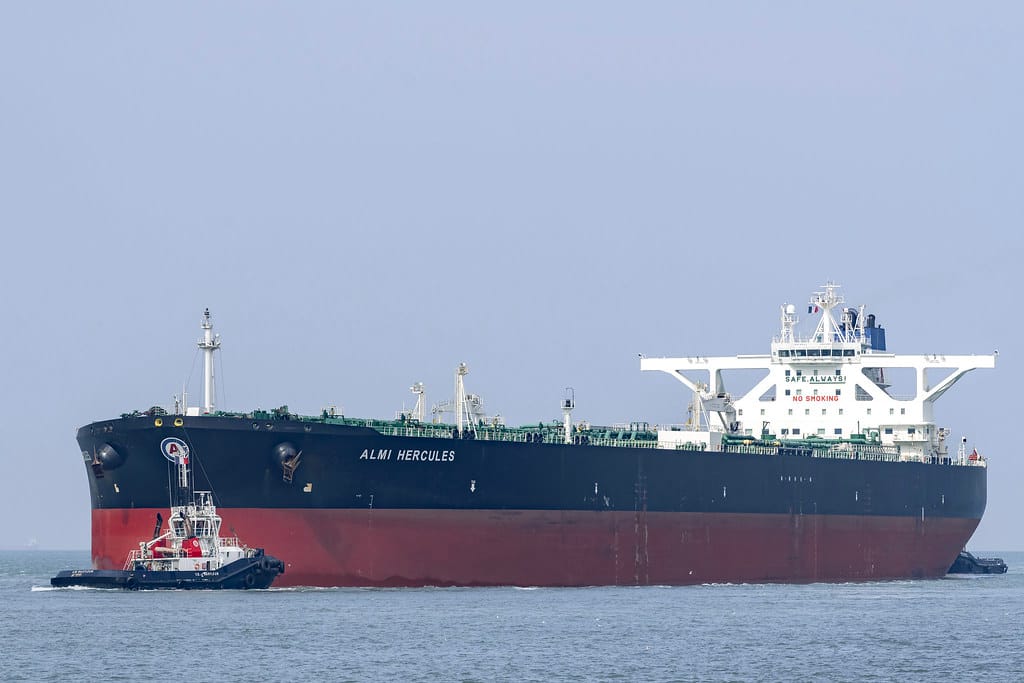
It’s because Iran has been attacking an important shipping channel that around a third of the world’s crude oil (that means oil that hasn’t been refined into petrol yet) and a fifth of the world’s natural liquified gas passes through on its export route to foreign countries.
What’s it called?
It’s called the Strait of Hormuz; it connects the Persian Gulf to the Arabian Sea. On one side of it is Oman and the United Arab Emirates, and on the other is Iran - and as shipping lanes go, it’s very narrow (33km at its narrowest point).
Why is it so important?
It’s a gateway for major oil producers like Saudi Arabia, Iraq, Kuwait and the UAE to transport their resources to huge economies throughout Europe and Asia. Before the war began, around 100 to 110 cargo ships travelled through it every day, and of those, about 50 or 60 were large tankers carrying oil and gas. But that traffic has ground to a halt now since Iran has been leveraging its geographical position to attack the tankers using drones, missiles, and unmanned speed boats packed with explosives.
Why is Iran targeting it?
Iran’s leaders say they’ll ensure the channel remains shut to ships, given what the bottleneck means for Western economies that rely heavily on oil to function. In a nutshell, the squeeze on supply has meant there’s less available, and that’s caused the price of Brent crude oil (that’s from the North Sea and the benchmark we look at) to jump dramatically from around US$70 per barrel to around US$103 per barrel.
What does it mean for us here in Oz?
Those wholesale prices are being passed onto motorists (we’re now paying an average price in Oz of $2.20 per litre for unleaded compared to $1.85 before the war started on 28 February).
So we’re quite dependent on the Middle East for our fuel?
The price rises at the petrol pump have really brought home to us just how much we rely on that part of the world - and that particular shipping lane - for oil and gas. So with that in mind, let’s take a look at our own oil supply chain and what our options are when it comes to making sure we don’t run out of fuel.
How does oil get to Australia?
You might’ve heard of the term ‘oil fields’ - they’re the parts of the world where oil is extracted, and the biggest ones with recoverable oil (meaning there are facilities in place to extract it) are in the Middle East, specifically Saudi Arabia, the UAE, Iran and Kuwait… And to be clear, we don’t buy directly from the Middle East - we buy from massive oil refineries in Asia that buy from the Middle East.
Got it… So how does the process work?
When crude oil is extracted out of the ground, it has to go through a refining process to be turned into petrol, diesel or jet fuel. Oil from the Middle East goes all over the world, but a lot of it comes by ship to those huge refineries we mentioned in Asia - they’re in places like Singapore, Malaysia, and South Korea.
Do we produce any oil?
We do, but our output has fallen by around 90% since 2000, mainly due to our oil fields, like the one in Bass Strait, being depleted and our aging infrastructure not being able to compete in terms of price-efficiency with those high-tech refineries in Asia. Most of the oil we produce now comes from the North West Shelf in Western Oz - and there’s some renewed interest in possible exploration for oil in Southern Queensland’s Taroom Trough. But it’s a way off…
So we import it instead?
Yes… Over the past 20 years, 6 of our 8 major refineries have closed, and it now makes more sense economically to import refined fuel than to process the crude oil (that’s the unrefined stuff) that we produce ourselves. So 90% of our oil is now imported as a refined product, ready for petrol/diesel tanks. The small amount of crude oil we import gets refined (along with the crude we extract domestically) at our 2 remaining refineries - Ampol’s facility in Brisbane and Viva Energy’s Geelong one in Victoria.
What happens to it?
It’s then shipped or trucked to huge storage facilities around the country, and from there, it’s trucked to petrol stations, farms and other businesses that need it. So when there’s interruptions to that supply chain, you can see how we’re left exposed - and that begs the question of what we do next… We’re a big country that relies heavily on fuel to get our food and goods around. And it’s not just the rising cost of fuel affecting inflation that’s got people jittery - there are genuine concerns from industry bodies that our supply of fuel could run out…
What measures are we taking?
We’re a member of the International Energy Agency and we’ve agreed to keep a stash of emergency fuel supplies on hand, but we don’t have the storage capacity in place to keep the 90 days worth that’s recommended. Instead, we’re keeping around 36 days worth of petrol and 32 days of diesel and 29 days of jet fuel. The IEA last week authorised the release of a record number of oil reserves - 400 million barrels. That’s about 63 billion litres, which equates to around 4 days of global oil consumption and 20 days worth passing through the Strait of Hormuz.
Are we doing that too?
We’ve agreed to release 762 million litres of petrol and diesel from our emergency reserves (about 20% of our stash) - it’s the first time those reserves have been tapped since 2022… The other thing we’re doing to boost the amount we have available is relaxing our quality standards for 60 days to allow fuel with a higher sulphur content that would’ve been exported to instead be blended into our domestic supply.
How much will that ease things?
It’s expected to add around 100 million litres to our supply per month and it’s earmarked for regional areas that are particularly in danger of running low… And in the meantime, Energy Minister Chris Bowen is urging people not to panic buy - he reckons that’s the one thing that’s currently stretching our supply, especially in those out-of-the-way areas.
What else is on the table?
There’s a national cabinet meeting happening today to discuss how we can shore up our supply. At that, former head of the Australia Energy Regulator Anthea Harris has been announced as the national fuel supply taskforce coordinator - she’ll act as a bridge between the government and private sector…
Anything else?
Some experts have pointed to rationing as a possible way to make sure we don’t run out. The last time we rationed fuel was in 1979 during the world’s second global oil crisis, and it again involved Iran - it was during the Iranian Revolution... Before that, it was during WWII. So it’s only been imposed in pretty extreme circumstances - and the government reckons we’re not there just yet, although they’re not ruling it out completely if the war is prolonged…
So, where does that leave us?
The big fuel companies say they’ve got shipments of fuel coming for the next month. After that, we’re at the mercy of our Asian suppliers - those mega refineries we mentioned. They’re in a scramble right now to get oil from sources other than the Middle East. While that happens, refineries in Singapore and Malaysia have reduced their output, meaning there’s less to go around and prices are ramping up… And one other thing to clock is that we get around 32% of our jet fuel from China, and they’ve begun cancelling shipments to protect their own supply.
Are some Oz companies looking further afield too?
Yep… Reports say some companies have already booked long-haul shipments of oil directly from the US and Africa. Critics of US President Donald Trump have been quick to point out that US oil producers stand to gain a windfall to the tune of US$60 billion from the war in Iran and the ongoing global oil shortage. And while we’re on the topic, the other major oil producer rubbing its hands together is Russia… But Trump has shrugged off the shade from European leaders (and from Democrats within the US), saying higher energy costs in the short term are “a small price to pay” for global security and making sure Iran doesn’t have a nuclear weapon.
What’s next?
We still don’t have a clear idea of when the war will end, but in the meantime we can expect the government to be watching fuel prices closely - they’ve threatened to fine companies found to be price-gouging. And with inflation on the radar and cost of living pressures again squeezing Aussie households, how we get our oil and how much we’re paying for it is likely to stay firmly in focus…
Onto our Recommendations
Reading: This SBS article demonstrates our supply chain in charts. We found it helpful for understanding our situation…
Reading: This story from The Guardian which details all the ways the disruption in the Strait of Hormuz is impacting us here in Oz - and along with the rise in fuel prices, there’s also increased sales of electric vehicles, a rise in the cost of plastic packaging and a shortage of helium gas which is used to power MRI machines in hospitals.
A fix for an overstuffed suitcase

If you’re anything like us, packing for the holidays means a bulging suitcase... To help with that, Brisbane brand Simplify Living has created vacuum travel bags that compress with a small handheld pump - squeeze the air out and watch your stack halve in size. Genius... Find out more here.
Recent Shortcuts
 | What are data centres? |
 | What are the Gulf States? |